Fast Online Personal Loans for Immediate Financial Needs
Quick loan options provide a straightforward path when unexpected bills or high-interest.


Speed matters because prolonged financial stress impacts your budget, credit health and peace of mind.
This guide walks you through how fast online loans work, what to expect during the application process, and how to compare terms so you can make a confident decision today.
Why Speed Matters When Managing Debt
Many households juggle multiple debts—credit cards, store accounts, lines of credit—each with its own payment date, interest rate and minimum obligation.
This scattered approach drains mental energy and makes budgeting unpredictable. Financial regularization begins by consolidating these separate obligations into one streamlined structure.
When you apply for a personal loan, you’re replacing multiple creditors with a single lender, which means one payment date, one interest rate and full visibility into your repayment timeline.

This clarity reduces the risk of missed payments and the stress that comes with juggling several accounts.
A faster online application means you can move from decision to approval to funding within days rather than weeks.
That speed allows you to settle high-interest debts immediately and begin saving on interest costs right away.
How Consolidation Simplifies Your Monthly Budget
The core advantage of consolidation is simplicity. Instead of tracking five or six payment obligations, you have one.
Lower interest than credit cards is typical when you consolidate revolving debt into a personal loan—credit cards often charge 19% to 22% annual interest, while personal loans may be 7% to 15% depending on your credit profile and the lender.

That difference matters in real terms. A $10,000 balance on a credit card at 21% annual interest costs roughly $2,100 per year in interest alone.
The same amount borrowed as a personal loan at 10% annual interest costs roughly $1,000 per year—a significant saving that goes directly toward principal and faster debt elimination.
Streamlined payments also mean fewer missed-payment risks.
When you’re managing one due date instead of multiple dates scattered across the month, you’re less likely to overlook a bill.
On-time payments protect and gradually improve your credit score, which opens doors to better rates on future borrowing.
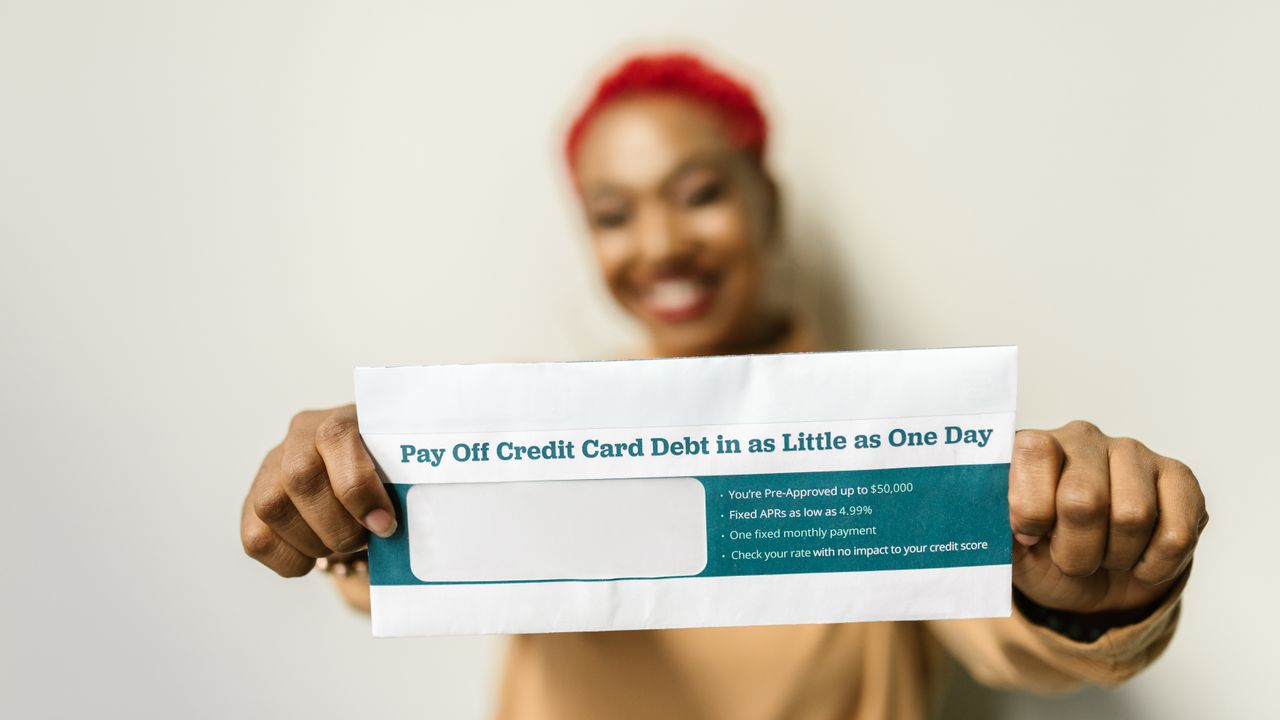
Choosing the Right Loan Term for Your Situation
Loan terms typically range from 24 months to 84 months, depending on the lender and loan amount. A shorter term (24–36 months) means higher monthly payments but lower total interest paid.
A longer term (60–84 months) spreads the cost over more months, reducing each payment but increasing total interest.
The choice depends on your household budget. If you can afford $500 monthly, a $12,000 loan might take 24 months at a higher payment or 60 months at a lower payment.
Cash flow improvement happens when your new loan payment fits comfortably into your budget, freeing up funds for savings, investment or other goals.

Many borrowers find that extending the term slightly—moving from 36 to 48 months—reduces the monthly burden enough to improve overall financial stability without dramatically increasing total interest, especially when consolidating from higher credit-card rates.
Step-by-Step Path to Compare and Apply
The online process is designed to be quick and straightforward. Here’s what to expect:
- Gather balances and interest rates — Write down the outstanding balance, annual interest rate and minimum payment for each debt you want to consolidate.
- Research loan options — Visit lender websites and review personal loan offers. Many lenders show estimated rates within minutes using a soft credit inquiry.
- Check your credit score — You can access your credit report free from Equifax or TransUnion. Knowing your score helps you understand what rate range to expect.
- Compare fees and terms — Look beyond the interest rate. Check for administration fees, prepayment penalties and any other charges that affect the true cost.
- Submit applications confidently — Once you’ve chosen a lender, gather required documents (pay stubs, ID, bank statements) and complete the online application.
After submission, most lenders provide a decision within 24 to 48 hours. If approved, funds typically arrive within 2–5 business days, depending on the lender and your bank.
You’ll then use those funds to pay off your existing debts immediately, leaving you with a single loan payment.
Understanding Credit and Eligibility
Lenders assess eligibility based on several factors: your credit score, income, employment history and debt-to-income ratio. You don’t need perfect credit to qualify for a personal loan.

Many lenders offer options for borrowers with fair or average credit, though the interest rate may be higher than for those with excellent credit.
A soft credit inquiry—used during pre-qualification—doesn’t appear on your credit report and doesn’t affect your score. However, once you formally apply, the lender conducts a hard inquiry, which does appear on your report for a short period.
Multiple hard inquiries in a short timeframe may slightly lower your score, so try to complete your comparison and application within a focused window (ideally 14 days or less).
Income verification is standard. Lenders want to confirm you can repay the loan. Self-employed borrowers may need to provide additional documents such as tax returns, but many lenders accept them without penalty.
| Comparison Factor | Credit Card | Personal Loan | Home Equity Line |
|---|---|---|---|
| Typical Interest Rate | 19–22% annually | 7–15% annually | 6–10% annually |
| Payment Structure | Flexible minimum, revolving | Fixed monthly amount, term-based | Variable, secured by home |
| Time to Access Funds | Immediate if pre-approved | 2–5 business days after approval | 7–14 business days |
| Best For | Ongoing purchases | One-time debt consolidation | Large amounts, stable equity |
Building Confidence and Long-Term Financial Health
Consolidation delivers both practical and emotional relief. Practically, you reduce interest costs and simplify payments.
Emotionally, you regain financial empowerment by taking direct action to address debt instead of letting it compound.
Budget stabilization follows naturally when your obligations are predictable. You know exactly what you owe each month, which allows better planning for groceries, utilities, savings and unexpected expenses.
That predictability reduces financial anxiety and allows you to focus on rebuilding an emergency fund or saving for longer-term goals.
As you make on-time payments over the life of the loan, your credit score improves.
That improvement opens access to better rates on car loans, mortgages or future credit offers. Debt elimination becomes a realistic timeline, not a distant dream.
Personal loans work best when paired with disciplined spending habits. Once you’ve consolidated and freed up budget room, avoid accumulating new debt on the credit cards you’ve paid off.
Many borrowers find that consolidation serves as a reset point—a moment to rebuild financial habits and move toward stability.
If you’re ready to explore how consolidation could work for your situation, gather your debt balances and check your credit score today.
Compare loan options from reputable Canadian lenders, understand the fees and terms, and submit an application when you find an offer that fits your budget.
The process is simple, online and designed to move quickly so you can begin your path toward financial control and confidence.